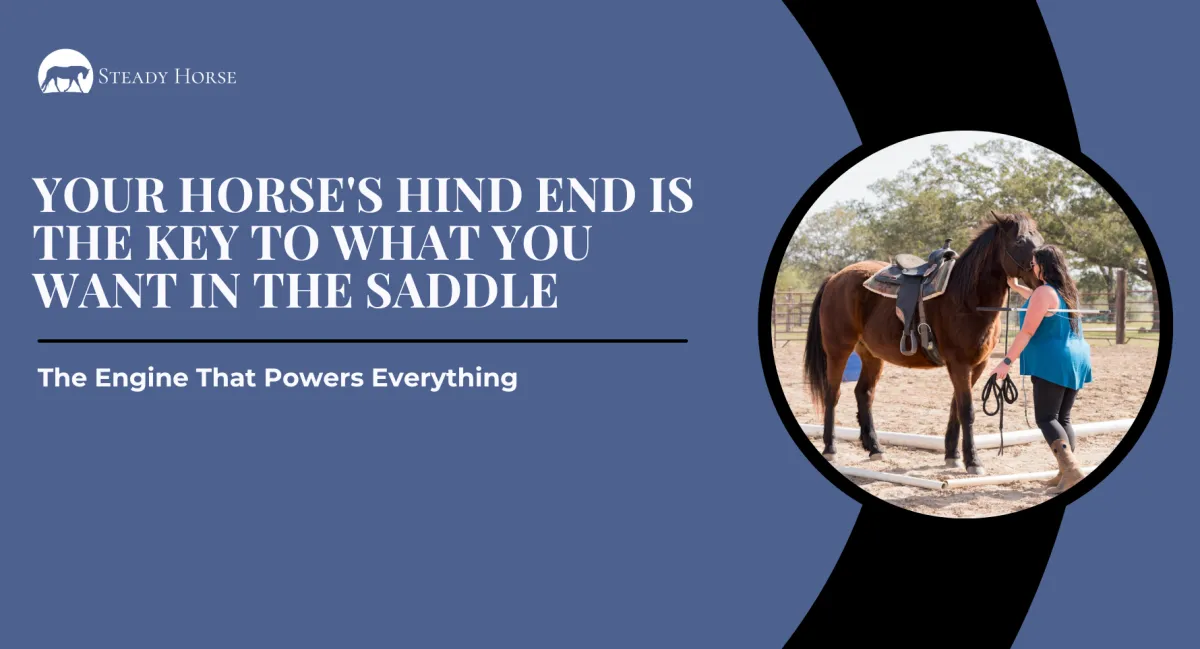
Your Horse's Hind End Is the Key
If you've ever felt like something was missing in your riding — like your horse is heavy on the forehand, sluggish in transitions, resistant to slowing down, or just not quite balanced — there's a good chance the answer is the same no matter which of those problems you're dealing with.
It's the hind end.
The hind end is involved in every single thing your horse does. Every forward step. Every stop. Every turn. Every transition up and down. Every backup. Every lateral movement. Every moment of balance and collection. It all traces back to whether your horse knows how to use that hind end effectively and whether you know how to direct it.
And yet, for as important as it is, hind end control is one of the most underworked areas in most training programs. Riders spend hours on the front end. They work on bending the nose, tipping the head, picking up the correct lead. All good things. But the engine that drives everything is behind the saddle, and if that engine isn't engaged, everything in front of it suffers.
When you understand what the hind end does, why it matters, and how to develop real control of it from the ground and from the saddle, something shifts in your entire partnership. Your horse becomes more balanced. Your transitions get smoother. Your stops get softer. Your horse becomes more willing, more confident, and more responsive. And you become a more effective, more confident rider.
It all starts behind the drive line.
The Engine That Powers Everything
Think about your horse's body like a vehicle. The front end is the steering. The hind end is the engine. You can turn the steering wheel all day long, but without the engine engaged, you're not going anywhere meaningful. And if the engine is running in a way that's unbalanced or inefficient, every turn, every stop, every acceleration is going to feel rough.
That's exactly what happens when a horse isn't using their hind end well.
When your horse pushes off into a forward step, what are they pushing off of? The hind end. When they speed up from a walk to a trot or a trot to a canter, where does that energy come from? The hind end. They're pushing off those powerful hindquarters, engaging that massive muscle mass to propel themselves forward.
When your horse slows down, what should they be doing? Bringing that hind end up underneath them to decelerate with balance. Not dumping onto the forehand and plowing to a stop. Not hollowing out their back and throwing their head up. Stepping under with the hind legs, shifting their weight back, and coming down through the gait with control.
When your horse backs up, what are they doing? Rocking back onto that hind end. Shifting their weight behind them. Loading those hindquarters and stepping back with intention rather than shuffling backwards with their weight on their front feet.
When you ask for lateral movement, when you need that hip to swing left or right, when you want your horse to turn on the forehand or yield their hindquarters, every bit of that movement originates from the hind end.
Forward. Backward. Faster. Slower. Left. Right. It all comes from the same place. If you can control the hind end, you can control the horse.
Why Most Horses Are Front End Heavy (And Why It Matters)
Horses naturally carry the majority of their weight on their front end. That's just how they're built. Their head and neck are heavy, and without training, most of that weight sits forward over the front legs.
This is why we spend so much time in the Steady Horse Unbreakable Bond program teaching our horses to shift that weight to the hind end. And there are two big reasons it matters.
The first reason is about connection and safety. A horse that carries their weight on the front end is a horse that is loaded forward. And a horse that is loaded forward is a horse that is ready to go. Their weight is already pointed in the direction of departure. If something spooks them, if their instincts kick in, if they decide they want to leave, they're already set up to do exactly that. There's nothing slowing them down. They just push off and go.
A horse that carries their weight on the hind end is the opposite. They're loaded behind. Their weight is sitting back. They're not coiled to spring forward. They're settled. They're more likely to stay with you. They're more likely to wait for your direction. They're more balanced and more connected because their body is in a position that says, "I'm here. I'm staying. What do you need?"
That distinction matters enormously under saddle. A horse that's front end heavy on the trail is a horse that's one spook away from launching forward with all of their weight already headed in that direction. A horse that's engaged behind is a horse that has to shift their weight before they can take off, which gives you that extra fraction of a second to redirect, to breathe them down, to ask for a stop.
The second reason is longevity. Horses have significantly more muscle mass in their hindquarters than in their front end. Those muscles are designed to carry weight, generate power, and absorb impact. The front end structures — the joints, the tendons, the smaller muscles — are not built to carry a disproportionate load over time.
This is why front end lameness is far more common than hind end lameness in horses. They're carrying too much weight on structures that weren't designed to handle it. When we teach our horses to engage the hind end and distribute their weight more evenly, we're not just making them better to ride. We're protecting them physically. We're investing in their soundness and their long-term health.
A horse that uses their hind end well is a horse that's going to stay sound longer, move better longer, and carry you more comfortably for years to come.
What Hind End Engagement Actually Looks Like
So what does it actually look like when a horse is using their hind end well? And what does it look like when they're not?
A horse that's not engaging their hind end will feel heavy in your hands. They'll lean on the bit. They'll plow through transitions instead of moving through them with balance. Their downward transitions will feel abrupt or strung out. They'll feel like they're falling forward into the trot or dragging into the walk instead of stepping down into it smoothly.
Under saddle, you'll feel like you're working harder than your horse is. Like you're constantly holding them up or pushing them forward or trying to manage their balance for them. Your arms will be tired. Your legs will be tired. And your horse will feel stiff, resistant, and heavy.
A horse that is engaging their hind end feels completely different. They're lighter in your hands. Their transitions are smooth and balanced. When you ask for an upward departure, they push off from behind with power and lift instead of lurching forward. When you ask for a downward transition, they step under with their hind legs and slow with balance instead of falling onto the forehand.
They feel responsive. They feel willing. They feel like they're carrying you instead of dragging you along. And the ride becomes easier for both of you because the engine is doing what it's supposed to do.
You can see it from the ground, too. Watch your horse move on the circle during a sending exercise. Are they tracking up, with their hind feet stepping into or past the prints of their front feet? Is there impulsion from behind, or are they just shuffling along? When you ask for a transition, do they push into it from the hind end or pull themselves into it from the front?
These are the indicators that tell you whether your horse's hind end is engaged or checked out. And the good news is that every single groundwork exercise you're already doing can be used to develop hind end engagement if you know what to look for.
How Direction Training Develops the Hind End
This is where it all comes together. Direction training — moving the front end and moving the hind end — is the second of the five ways exercises for building a bond with your horse. And while the front end gets a lot of attention, the hind end is where the real power lives.
When you ask your horse to move their hind end over, you're asking them to step up underneath themselves with that inside hind leg. You're asking them to shift their weight, engage those hindquarter muscles, and move laterally with intention. Every time you do this, you're building their awareness of that hind end and teaching them how to use it.
And you want to be able to do it multiple ways. Put a thumb in their ribcage. Place your hand at the point of the hip. Under saddle, pick up that inside rein and bring it back toward your thigh. Use your leg behind the cinch. The more ways your horse can respond to a cue to move that hind end, the deeper their understanding becomes and the softer and more willing they get about doing it.
When you move the hip to the right, you're turning on the forehand to the left. When you move the hip to the left, you're turning on the forehand to the right. That lateral movement of the hind end gives you directional control of the entire horse because where the hind end goes, the horse follows.
Think about what that means for your riding. If your horse is drifting toward the gate, you can redirect the hind end and change the direction of the whole body. If your horse is bracing against you and pushing through your aids, engaging the hind end breaks that pattern and brings their focus back to you. If your horse is getting heavy on the forehand, moving the hip shifts their weight behind them and rebalances them.
The hind end is your steering, your brakes, your accelerator, and your rebalancing tool all wrapped into one. And the more solid your control of it becomes, the more confident and capable you become as a rider.
Transitions Are Hind End Training in Disguise
Here's something that might shift the way you think about an exercise you're already doing.
Every transition you ask for during sending is a hind end exercise. Every single one. And if you've been thinking of transitions as just changing gaits, you've been missing half of what they're doing for your horse.
When your horse departs from a walk into a trot, they have to push off with the hind end to make that upward transition. That push requires hind end engagement. When they come down from a canter to a trot, they have to bring that hind end up underneath them to slow down with balance. That collection requires hind end engagement.
Every transition up teaches your horse to push from behind. Every transition down teaches your horse to carry from behind. And the more transitions you do in a session, the more practice your horse gets at using that engine.
This is why we say at Steady Horse that it's better to do one minute of sending with thirty transitions than thirty minutes of sending with one transition. The transitions are where the learning happens. The transitions are where the hind end gets stronger, more engaged, and more responsive.
And here's the part that connects it to everything else: a horse that transitions well is a horse that's balanced. A horse that's balanced is a horse that's confident. A horse that's confident is a horse that stays with you. It all comes back to the hind end.
Don't take your sending transitions for granted. Your horse is learning so much more in those exercises than you might realize. Every departure, every downward transition, every shift in gait is training your horse to engage the most powerful part of their body. And that training is what makes everything else you do together feel easier, safer, and more connected.
Building Hind End Control From the Ground Up
If you're thinking, "Okay, I get it. The hind end matters. But how do I actually develop this?" the answer is in the exercises you're already working on.
The backup is a hind end exercise. When your horse rocks back and steps backwards, they're loading the hind end. They're shifting their weight behind them. They're learning that the hind end is where their balance lives. Every quality backup is a rep of hind end engagement.
Moving the hind end over is the most direct hind end exercise you have. You're asking that hip to move, that inside hind leg to step under, and that weight to shift. Do it from both sides. Do it multiple ways. Build it until your horse yields that hind end softly and willingly from the lightest cue.
Sending with transitions is your hind end conditioning program. Those upward departures build push power. Those downward transitions build collection and control. The more transitions you do, the stronger and more responsive the hind end becomes.
Flexion exercises connect to the hind end, too. When you tip the nose and your horse softens laterally, the hind end has to adjust. When you bend deeper and ask for full flexion, the hind end engages to support that bend. Softness in the front creates engagement behind.
You don't need special exercises or advanced maneuvers to develop hind end control. You need the exercises you already have, done consistently, done well, with attention to what the hind end is doing during each one. Start watching for it. Start feeling for it. And start rewarding your horse when you see them stepping under, rocking back, and using that engine the way it's designed to be used.
What This Means for Your Confidence
Here's the piece that ties it all together.
When you have solid control of your horse's hind end, you have something that every rider wants but few know how to build: confidence that isn't based on hope.
You know that if your horse tries to take off, you can engage the hind end and redirect them. You know that if they get heavy and start pulling, you can shift their weight behind them and rebalance. You know that if they get worried and want to flee, you have the tools to keep them with you because you've trained the very part of their body that makes leaving possible.
That's not wishful thinking. That's skill. That's preparation. That's the kind of confidence that comes from knowing you've done the work.
And your horse feels it, too. A horse that's been taught to use their hind end is a horse that's more balanced, more comfortable, and more confident in their own body. They move better. They feel better. They're not straining under the weight of a body that's loaded incorrectly. They're carrying themselves and you with strength and ease.
That mutual confidence — yours in your ability to direct, theirs in their ability to respond — is what builds an unbreakable bond. Not a bond built on hope. A bond built on skill, clarity, and trust.
Ready to Build That Foundation?
If you're looking for a clear place to start building the kind of groundwork and connection that makes everything else possible, there's a free training available right now that walks you through exactly how. It's focused on safety, confidence, and the partnership that transforms your riding from the ground up. It's available for a limited time, so don't let it pass by.
